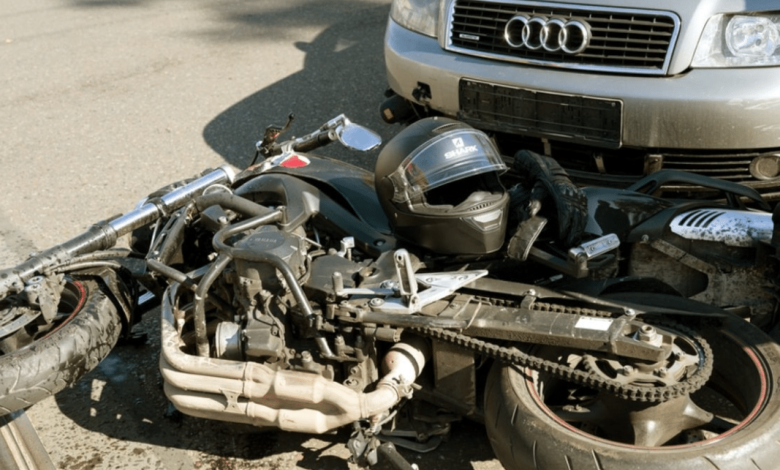
Many motorcycle crashes in Austin don’t happen because a driver fails to see a rider at all. They happen because the driver sees the motorcycle—but badly misjudges the gap.
The driver thinks there is enough time or space to turn, merge, or cross. There isn’t. For a rider, that miscalculation can be catastrophic.
Motorcycles Are Harder to Judge Than Cars
Human perception relies heavily on size and familiarity. Because motorcycles are smaller than cars, drivers often misinterpret:
- How fast a motorcycle is approaching
- How far away the motorcycle actually is
- How quickly the rider will reach the intersection
This isn’t a rider issue. It’s a well-documented visual perception problem.
A motorcycle can be fully visible and still be misjudged.
Where Gap Misjudgment Happens Most in Austin
Certain driving situations make gap errors far more likely.
Left-Turn Intersections
This is one of the most common motorcycle crash scenarios. A driver waits, sees a motorcycle approaching, and turns left anyway—believing they have enough time.
They don’t.
Driveways and Private Entrances
Drivers pulling out of parking lots or side streets often judge gaps quickly. A motorcycle approaching at normal speed can be mistaken for being farther away than it really is.
Lane Changes in Moderate Traffic
On multi-lane roads, drivers glance, see a motorcycle, and assume it is moving slower than surrounding traffic. They change lanes directly into the rider’s path.
Why Drivers Say “I Thought I Had Time”
After these crashes, drivers often give the same explanation:
- “I thought I had time.”
- “It looked farther away.”
- “I didn’t think it was going that fast.”
These statements matter. They often confirm misjudgment rather than rider fault.
Insurance companies, however, may twist this into arguments about:
- Alleged speeding
- Aggressive riding
- Lane positioning
That is why riders often consult an Austin, TX Motorcycle Accident Lawyer when a crash revolves around a driver’s bad decision instead of clear rule-breaking.
Gap Errors Leave Riders With No Escape
When a driver misjudges a gap, the rider typically has:
- Less than a second to react
- No safe direction to swerve
- No room to brake effectively
Motorcycles accelerate and decelerate quickly, but they cannot defy physics. Once a vehicle pulls into a rider’s path, the outcome is often unavoidable.
How These Crashes Are Mischaracterized
Gap-misjudgment crashes are frequently labeled as:
- “Failure to yield with shared fault”
- “Unclear speed-related accidents”
- “Split liability incidents”
But the core issue is decision-making—not visibility or rider behavior.
The driver chose to move based on a bad assumption.
Evidence That Exposes Misjudged Gaps
These cases often rely on evidence that shows timing and distance rather than speed alone.
Useful evidence may include:
- Intersection layout and sightlines
- Traffic signal sequencing
- Skid mark length
- Impact location on vehicles
- Event data recorders from cars
- Witness statements describing timing
This evidence can demonstrate that the motorcycle was lawfully present and that the driver’s timing decision was unsafe.
Final Thoughts
Motorcycle accidents in Austin often begin with a driver misjudging a gap—not failing to see a rider or responding to reckless behavior.
These crashes happen in ordinary situations: left turns, lane changes, and driveway exits. Understanding gap misjudgment helps explain why responsible riders still get hit and why accountability should focus on driver decisions, not motorcycle size or speed myths.